
Translated from the Bengali into English by Clinton B. Seely
A peaceful, small town. But the tea shop where the local young men congregated opened onto the main road to Dhaka. Inside, constant clamor. Each table had its own topic of conversation. And words were hurled from one table in the direction of another. High-pitched music, blaring from a cassette. Waiters constantly hassled. The owner’s thunderous roaring. A veritable stream-truck, bus, and scooter-flowed through the street. Horns blaring. And when the wind rose, there arose a creaking, croaking wait through bamboos growing behind the shop.
But they could be heard.
His voice lowered, Badsha spoke just two little words. But they could clearly be heard.
“I’m going.”
He’d not expected them to be noticed amidst that din. He had voiced them merely as an experiment, assuming that none of his friends would hear him. And he wasn’t going to say them a second time.
Even he was startled. He seemed to recoil once he’d spoken those words. Who could have anticipated that mid-stream, in the current of noise inside and out, there would appear suddenly such an island of silence? Who’d have thought that upon that island his pronouncement, like a lone tree, would stand tall?
For a moment Badsha wondered whether the sudden lull the moment he spoke just happened. Or, did his declaration create that silence?
Be that as it may, he was rather pleased. The reaction proved even more astounding than he had anticipated.
Jalil’s political opinions just hung there, half hoisted.
Samad’s waving hand of objection turned to stone.
Jhumka, that maturing young thing from the loan-office neighborhood-her name, which for Ashraf and Abdul Momen had metamorphosed into a butterfly, now fluttered away.
The new poem that marched sprightly from Syamalendu’s pen stumbled, along with the spelling of “suffering.”
Kaci, senior amongst them, had been dunking a cookie in his tea. Soggy, it disintegrated in his hand.
The inspiration seemed to take hold of Badsha. Shaking off the tentative quality in his voice of a moment ago, he now reiterated full-throated, entranced, “Yes, I’m going.”
His companions, somewhat taken aback, stared at him. Within these two everyday words they all of a sudden discovered something unexpected, quite possibly incomprehensible.
Because of his age, perhaps, it was Kaci who first stirred.
“What do you mean, you’re going?”
Badsha cast a dreamy glance towards Kaci, but offered no explanation.
Pausing momentarily, Kaci again questioned, “What do you mean by you’re going? Where’re you going?”
No reply came. Actually, Badsha hadn’t really thought about it any further. Or rather, he had thought about it, but not thought it through clearly. At that precise moment his common sense yet prevailed. He could still have said, “nowhere,” he was going nowhere, that is to say, what people mean when they say “going” away, far, to great expectations, to bigger and better things, no, it was not that sort of “going”. Yes, he could still take it all back. So what if he took it back? These friends, to a man, would give a hoot and a holler, no more.
But he said nothing. Just remained quiet.
Every one of those present who looked into his eyes perceived sunlight from some faraway world. Sunlight in whose warmth man’s dreams become visible, tangible.
Slowly, but steadily, Badsha came to sense a sort of power. He felt himself somehow profoundly removed, far distant. He seemed astride some towering pinnacle. And this exhilaration he was not ready to relinquish. He’d never realized such a thrill could ever be his. He hadn’t passed his exams. In one after another attempt at earning a living he’d been a failure. Unsuccessful in love, embarrassed by a hoarse voice when he’d tried to learn to sing, even in this realm of tea shop small talk he was no rajah but merely part of someone else’s retinue. Now, instantaneously, he found all, his psychic fatigue, his feelings of inferiority fading. He sensed himself the center of everything.
Badsha spoke again. “I’m going soon.”
Syamalendu retorted derisively, and as he spoke resumed his writing. “He’s probably going to Dhaka. Where else would he go?”
Badsha shook his head. Momentarily, to his mind’s eye. Dhaka beckoned, but he ignored that and once again, only more forcefully, shook his head. Syamalendu’s eyes were upon his work. So Badsha said aloud, “No, I’m not going to Dhaka.”
Syamalendu looked up, his brow now furrowed.
With a slap on the table, Jalil asked, “Then where is it you’re going? Why all the mystery?”
He’s “So he tells us something or other,” added “Samad probably headed to Jessore to take in a movie during the Eid holidays.”
A burst of laughter erupted. The awe of a moment earlier had been sliced to bits by levity’s blade. It was then that Badsha stiffened. But on the spur of the moment he couldn’t quite figure out what to say. With jaws firmly set, he sat there, eyes fixed upon the table.
“That’s right. What else could it be?” In this manner Abdul Momen tried to resolve the matter and turn attention back toward Jhumka. Ashraf was Jhumka’s neighbor, and he had a real crush on Jhumka’s elder sister. Whenever these two friends got together, the conversation always found its way to that matter. And because of that, they’d become real chum buddies for some time now.
Badsha had no interest in Jhumka or her sister, not in anyone really, yet he felt envious of Ashraf and Abdul Momen.
Suddenly Badsha leapt to his feet and shouted, “Just watch. You’ll find out when I go.”
No one had ever seen Badsha so agitated. He had made somewhat of a name for himself as the most calm, controlled of fellows. And one doesn’t toss away such a reputation for no good reason. Kaci grabbed hold of his hand and sat him down.
“Hey, hey what’s going on with you guys, Badsha? Sit down, sit down.”
Kaci shouted to the waiter to bring Badsha a cup of tea.
“No, I don’t want any tea. I’ve got a bunch of work to do. I got to get a lot of things arranged. Got to go now.”
“All right. Aren’t you going to say where you’re going?”
Badsha wished he could say something that would leave them speechless, now and forever more. But nothing suitable came to mind. Or rather, what did enter his head was impossible to utter -at least from his perspective impossible because he just didn’t find the nerve to blurt it out. He merely sat there silent. But sitting silent seemed to him another mark of defeat. And he felt as though whatever he was fantasizing would be found out, if he just sat there silently. So he huffed and puffed, trying to act as though he were fuming with rage.
His tea arrived. Kaci had to importune him a time or two more to drink it. While he sipped, a terror seized him. Why, he thought, had he said those things at all? Things had been going on as they were for a long time now. For a long time he’d been unemployed. For a long time he’d drifted aimlessly. For a long time he’d listened to the carping and scolding at home. He’s seen his tea-shop comrades fall away, one by one to get married, take a job, and move to some other town. Had his father that very morning not thrown a brass tumbler at him and not uttered that disgusting doggerel, would he have gone on sitting there mum in the tea shop, then finally blurt out “I’m going”?
His father’s obscenity still now rang in his ears:
I dreamt my finger fair blue skies did bore;
I woke to find it lodged in my back door.
Badsha finished his tea, wiped his mouth, and stood up.
From behind, Ashraf couldn’t control his urge to goad. “Badsha, you going to the Middle East?” At the tea shop’s entrance, Badsha came to a sudden halt. He seemed to see refulgent before him a regal throne swathed in gold. Turning his head he replied, “You will find out when I go.”
Those primed by Ashraf’s jibe for another burst of laughter were caught off balance.
“Yes, I’m going to the Middle East.”
Badhsa paused there not a moment longer. But he didn’t go home. Instead, that day he spent a considerable amount of time wandering aimlessly. The sky, trees, dwellings, the long stretch of road which curved past a stand of bamboo, tubewells, jute warehouses, two date palms intertwined, the dilapidated Hindu temple out in the field-all of these seemed gradually to take cognizance of him. As though they were bidding him good-bye. As though he were seeing them for the last time. As though somehow he’d become a stranger, not of that place.
No sooner had he set foot in his house that evening than his widowed sister came running up to him.
“Are you really going to the Arab lands?”
Badsha made no reply.
His sister took hold of his hand and spoke again, “Is it true?”
Later, as she served him his evening meal of rice etc. she added, “When did you first decide? We had no idea! Your friends came by looking for you.”
Badsha smiled weakly. Then again his fantasy took hold. Again he turned secretive.
This sister, widowed with four kids-back home and living off her father. She was constantly depressed, from a sense of shame. Now that she could see a ray of hope, she got very excited.
“That’s great! Many people have become rich going to the Arab lands. And with your intelligence you’re a strong young man-you’ll make thousands of takas in no time. Then you’re going to have to bring me something, however.”
“What? Tell me.”
“You’ll do it?”
“Tel I me what do you want.”
“A sewing machine. Then you’ll see, you folks won’t have to keep supporting me. I’ll do just fine, sewing and such. And when Khokan grows up-you’ll be able to take him to the Arab lands, won’t you?”
“Why shouldn’t I? But let me get there first.”
Khokan slept in the outside room with Badsha. That night, Khokan asked, “Uncle, will you buy me a plane? A real big sort of plane?”
“Plane? Do you have any idea how much a plane costs? Millions and millions of takas.”
“No, no, a toy plane, with batteries. I saw one at Abu’s house the other day,”
Enthusiastically Khokan described the plane. Abu’s father had been in Dubai for the last two years. He’d returned several days ago for the Eed Holidays.
It occurred to Badsha that since the subject had come up, why not pay a visit to Abu’s father. Perhaps he might actually suggest some means for getting to the Middle East.
The next day he went to see Abu’s dad. But how could he broach the subject in the meantime, the man had already come to know, from who knows whom, that Badsha was going.
For some unknown reason Abu’s father did not seem particularly pleased. His brow knit, he said in a voice full of concern, “So you’re going. Well and good. There are many who are going. I myself went. But sticking it out, that’s the tough part. “
“How do you mean?”
“You’ve got to work day and night there. If you don’t show up for work, they expel you. And whatever else you might do or have done, they tolerate no inattentiveness on the job.”
Badsha assured him, he would throw himself into his work. He hadn’t foreseen that the intended purpose of his visit to Abu’s father would be turned inside out in this fashion. He just wanted to get up and leave.
Abu’s father resumed, “And then there’s another thing. It’s tough living there. You’re not going to find real friends there. Idle chit-chat, conversation will not be so easy to come by. You can’t be sure you’ll even find any Bengalis where you’re headed. Where are you going, by the way?”
Badsha plunged into the shoreless sea.
“The Middle East.”
“You realize, don’t you, that’s not just one tiny locale?”
Gamely, Badsha proclaimed, “Abu Dhabi.”
Abu’s father’s brow knit once again. “Hmmm, of course I don’t keep up with the latest in Abu Dhabi. What sort of job there? “
Now he was in a bind. What answer could he give?
“You’re here through Eid?” responded Badsha. “I’ll discuss this further with you later.”
He didn’t stop by the tea shop that day. Who knew, were his friends sitting around asking questions? Instead, Badsha sauntered casually through the bazaar. But even there a few people called out to him, tugged at his hand, inquired about his going to Arabia.
To some he gave a brief “Yes,” to other she just nodded and kept moving. He could feel upon his back the arrows of jealousy from some, the pounding fists of envious sighs from others. He considered himself a winner. And the feeling made him giddy.
A couple of days later he happened upon Jhumka and her big sister. The girls were about to enter a shoe store to purchase something for Eid, when their eyes and Badsha’s met. This day the girls did not avert their eyes, did not cock their proud head and turn away. Instead, the two of them gazed for a time in Badsha’s direction. Between themselves they exchanged a few words. Badsha was surprised, for somehow they seemed rather plain to him today.
Around the house, also, his value of a sudden shot up. The father who used to scold him daily, even he now, from his sickbed, shouted to the rest of the household to treat him nice, to see to his meals-for, after all, how many more days was he to be here, and when a few days hence he will have left for the Arab lands, the house was going to seem so empty. In the meantime, he even called Badsha over one day and, stroking his head and back, explained that all the chiding and chastising he’d done had been with Badsha’s best interests in mind. He told Badsha’s mother twenty-four times a day, “It’s because I threw the brass tumbler that day that the boy developed resolve, and now, just look, he’s really done something. You’re not to lack for anything anymore. This dirt-floored, split-bamboo-walled home of yours shall be rebuilt of brick. Badsha’s going to bring in electricity. Electric lights shall shine. You’ll be able to enjoy the breezes of a fan. You’ll get to watch television, just like at Abu’s house. Moreover, gold is cheap in the Arab countries. You’ve been after me my entire life for gold jewelry; your son’s now going to satisfy your every whim.”
No, no. This time Badsha would have to make the effort. He’d fallen into a trap of his own devising and now searched for a way of escape. He borrowed money from his sister for a trip to Dhaka.
There he learned afresh what he already knew. One couldn’t arrange to go to the Arab countries for less than twenty to twenty-five thousand takas. Badsha was well aware that he couldn’t scrape together two or three thousand takas even, let alone twenty to twenty-five. In Dhaka he noted that many had sold their land in order to be able to go. But Badsha’s family didn’t have any land.
Their household ran with the help of his two elder brothers plus father’s pension. Nor did the brothers do such a booming business that they could afford to contribute so great a sum.
On the contrary, the day the second eldest brother heard Badsha was going to Arabia he came by to say that, obviously, their father must have some funds stashed away, otherwise where did so much money for Badsha come from. And he left informing them that it might not be possible for him to keep sending them money, month after month.
Badsha hadn’t considered that particular angle. He felt bad about it. Why had he brought up the matter in the first place? And now, because of him, the family’s means of support might be cut off? Badsha failed to see any way of rectifying the situation.
And in fact, the following month that elder brother did excuse himself from giving money. When Badsha returned home he heard his father, who had for so many days praised his second son, ranting and raving against him. “He’ll see, he’ll see. It’s not long now till Badsha’ll be sending money back from Arabia, till the room will come alive with new things- then he’ll see, then he’ll come around. Well, come on, come around then, you bastard!”
Badsha went outside. He took a walk through his favorite field. The streets in town frightened him. Familiar faces seemed to chase him away. He didn’t want to run into anyone.
Then one day he did run into someone. Jhumka’s younger brother. At least Badsha had nothing to fear from him. He wouldn’t harass him with questions about his precise destination, the nature of his employment, the date of his departure. In an effort to gain some human companionship while at the same time avoiding human beings, Badsha now raised his hand and motioned for him to come near.
The boy was overjoyed. With eyes sparkling, he approached.
“Are you calling me?”
“Yes, you. You’re Jhumka’s brother, right?”
“Yes, I’m her younger brother. I’ve got three other brothers.”
Seated atop a culvert, watching trucks and buses careering by along the main road, Badsha spoke with the lad. Just little things. Ordinary things. Concerning school. Sports. At one point he asked about Jhumka, too. “Didn’t I see her that day at the shoe store?” From the boy he learned, because the shoes were too expensive she didn’t buy them. “I guess your sister’s not happy about that,” volunteered Badsha. “Just think, if she marries well, if your brother-in-law, for instance, takes a job in the Middle East, your worries would be over, wouldn’t they?”
A mere couple of weeks later something most unbelievable happened. That same boy pressed a folded piece of paper in Badsha’s hand and dashed off. Even before unfolding it Badsha sensed a most subtle, sweet scent. Of what exactly, he couldn’t quite make out. In his chest there commenced an unbearable pounding.
A letter, written by Jhumka. Though he read and reread it, he seemed incapable of comprehending what it said. His eyes invariably slipped off the letters. A single line obliterated all others, blazing forth “Will you remember us when you go abroad?”
What did it mean? What did Jhumka wish to say?
Though he understood full well, he yet seemed unable to understand. Though he got it, it somehow remained beyond his grasp. The whole day this was all he read. Aside, in secret, how many, many times he read that very letter! Time and again he set off in the direction of the loan office. Each time he turned about and came back.
Jhumka’s face hovered as a tiny happiness before his eyes. Hour by hour it grew larger. Quickly it grew. Any sweet fragrance he felt was somehow part of Jhumka. With any joy there existed a hidden link to Jhumka, so Badsha came to believe.
Then one day he got up the nerve to go to the loan-office neighborhood. He passed in front of Jhumka’s residence. Then retraced his steps. Then again he walked by.
He felt sorry for Abdul Momen that day he caught sight of him from afar in the bazaar. Constantly Jhumka’s letter in his shirt pocket sang to him. “Will you remember us when you go abroad?”
Quite suddenly Badsha came to realize that now nothing oppressed him, nothing really bothered him-not his father’s keen-eyed constant staring, nor his mother’s endless, silent questioning, nor his brother’s mean-heartedness, nor his widowed sister’s sewing machine, nor Khokan’s coveted toy.
Once more he found the courage to mix and mingle, to be with friends, to return to the tea shop on the main road. Then one afternoon he realized from where within himself that strength now came he realized, that is, when from a distance he caught sight of Jhumka, and when she make her eyes dance most wondrously before she hid her face within the rickshaw’s canopy.
He stepped into the tea shop.
Symalendu was reciting his poetry aloud; Ashraf and Abdul Momen were observing the flight of a butterfly; Jalil, at the next table, was holding forth on preconditions for a non-exploitive society; Samad, to himself, was drafting his rebuttal; it was just then that Badsha came in and pulled up a chair.
“You fellows are really carrying on, I see!”
The sound of his voice once again startled everybody. They all were well aware their Badsha had, since they last saw him, made great strides. But some out of envy, some from contempt wished to outshine his presence there.
When Kaci inquired, “Well Mr. Badsha, when’s it going to be?” He didn’t understand that Kaci wanted to know the date of the departure for the Middle East. He sensed the quickening pace of that dream within his chest, as though all knew about Jhumka, and it was their wedding date that Kaci wished to know.
Badsha, embarrassed, could say simply, “We’ll see, Kaci, we’ll see. You’ll all come to know.”
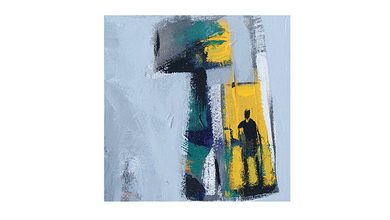
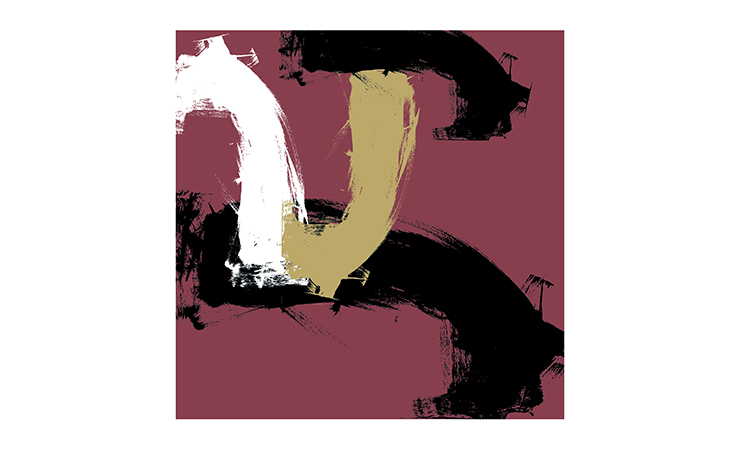
Illustration : Dhrubo Esh